Australian Driver’s License – Complete Application, Renewal, and Verification Guide
Wiki Article
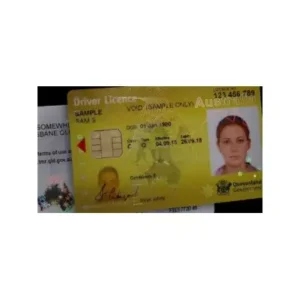
Obtaining an Australian Driver’s License is an important step toward driving legally and safely across the country’s vast road networks. Whether you are a new driver, a foreign resident, or a visitor looking to convert your overseas license, understanding the licensing system, eligibility, and testing requirements is essential. This detailed guide covers everything you need to know about how to apply for, renew, or validate an Australian copyright in 2025.
Overview of the Australian Driver’s License System
In Australia, driver’s licenses are issued and regulated by state and territory transport authorities, not by a national government agency. Each jurisdiction — including New South Wales (NSW), Victoria (VIC), Queensland (QLD), South Australia (SA), Western Australia (WA), Tasmania (TAS), Northern Territory (NT), and the Australian Capital Territory (ACT) — has its own process and set of requirements.
However, all valid Australian licenses are recognized nationwide, meaning a driver licensed in one state can legally drive anywhere in Australia.
Types of Australian Driver’s Licenses
Australian licenses are categorized by vehicle type and driving experience. Here’s an overview of the main classes:
1. Learner License (L Plates)
Issued to beginner drivers who must practice under supervision before qualifying for a full license.
-
Minimum age: 16 years (varies slightly by state)
-
Must pass a knowledge test and vision test
2. Provisional License (P Plates)
After holding a learner’s permit for a certain period (usually 12 months), drivers move to a provisional or probationary license, often marked as P1 or P2.
-
Must pass a practical driving test
-
Subject to speed limits, zero alcohol tolerance, and passenger restrictions
3. Full License
Granted after successfully completing the probationary period with a clean copyright. This license allows unrestricted driving across Australia.
4. Heavy Vehicle and Motorcycle Licenses
Separate classes exist for motorcycles (Class R) and heavy vehicles (Classes LR, MR, HR, HC, MC), each requiring additional training and tests.
Eligibility Requirements for an Australian copyright
To qualify for a driver’s license in Australia, applicants must meet the following general criteria:
-
Be at least 16 years old (for a learner permit)
-
Provide proof of identity and residency within the state or territory
-
Pass vision, knowledge, and practical driving tests
-
Complete any mandatory driver education or hazard perception tests
-
Hold a learner’s permit for the required minimum period (if applicable)
Foreign nationals or new residents may need to convert their overseas license if they plan to stay longer than a few months.
Documents Required for Australian Driver’s License Application
When applying for a license, you’ll need to submit specific documents to verify your identity and eligibility:
-
Proof of identity (copyright, copyright, or citizenship card)
-
Proof of residency (utility bill, lease agreement, or copyright)
-
Proof of visa or citizenship status (for non-citizens)
-
Medical certificate (if required for certain vehicle classes)
-
Completed application form (available at local service centers)
-
Payment of applicable fees
Each state may require a combination of primary and secondary identification documents under its “100-point identity check system.”
Steps to Apply for an Australian Driver’s License
Step 1: Pass the Knowledge Test
You must first pass a written knowledge test covering Australian road rules, traffic signs, and safe driving practices. Many states provide an online practice test for preparation.
Step 2: Obtain a Learner’s Permit
Once you pass the test, you’ll receive your L license, allowing you to practice driving under supervision. You must display L plates on your vehicle and maintain a learner’s logbook recording your supervised driving hours.
Step 3: Complete Required Driving Hours
Learner drivers are required to complete at least 100–120 hours of supervised driving (including night driving), depending on the state or territory.
Step 4: Take the Hazard Perception Test
This test measures your ability to identify and respond to potential driving hazards using a computer-based simulation.
Step 5: Pass the Practical Driving Test
The on-road test evaluates your driving skills, control, observation, and compliance with traffic laws. Successful candidates progress to the Provisional P1 license.
Step 6: Progress to Full License
After holding a P1 and then P2 license for the required time (usually 2–3 years), and maintaining a good copyright, you can apply for a full Australian driver’s license.
Converting an Overseas License to an Australian License
If you hold a foreign copyright, you may be able to convert it to an Australian license depending on your visa status and country of origin.
Eligibility for Direct Transfer
Citizens from recognized countries such as the UK, USA, Canada, New Zealand, Singapore, and members of the EU can often exchange their existing licenses without retaking tests (depending on state rules).
For Non-Recognized Countries
Applicants must usually:
-
Pass the knowledge test
-
Complete a practical driving assessment
-
Provide certified translations if the foreign license is not in English
Temporary Visitors
Tourists and temporary visa holders can drive with their overseas license (and an English translation or International copyright) for a limited period, usually up to three months after arrival.
Renewing Your Australian Driver’s License
Driver’s licenses in Australia are typically valid for 1, 3, or 5 years, depending on your choice during application. Renewal can be done online, by mail, or in person at a service center.
Documents Required for Renewal
-
Expired or expiring license
-
Proof of identity
-
Medical certificate (if applicable)
-
Payment for renewal fees
You’ll receive your new license card via mail, usually within 7–10 business days.
Replacing a Lost, Stolen, or Damaged License
If your license is lost, stolen, or damaged, you can easily request a replacement from your state’s transport authority.
Most states allow you to apply online or at a service center. You may need to provide:
-
Proof of identity
-
Police report (for theft)
-
Payment for replacement fee
A temporary paper license may be issued while waiting for the physical card.
copyright Fees in Australia
Fees vary depending on the state or territory. Approximate costs include:
| License Type | Average Fee (AUD) |
|---|---|
| Learner Permit | $25 – $60 |
| Provisional License | $75 – $150 |
| Full License | $100 – $200 |
| Renewal (5 years) | $150 – $200 |
| Replacement | $30 – $50 |
Always check with your local transport department for the most accurate and updated fee structure.
Key Benefits of an Australian Driver’s License
-
Recognized nationwide across all states and territories
-
Serves as an official photo identification for banking, travel, and verification
-
Enables legal driving of cars, motorcycles, or commercial vehicles
-
Can be used for international driving permits (IDP) when traveling abroad
Conclusion
A valid Australian Driver’s License not only gives you the freedom to drive but also serves as one of the most trusted forms of personal identification in Australia. Whether you are applying for the first time, converting an overseas license, or renewing an existing one, understanding the process ensures compliance with state laws and enhances your driving confidence.
Drive safely, stay informed, and enjoy the freedom that comes with being a responsible Australian driver.
Report this wiki page